BLOG POST #2
This week, we were given the opportunity to go through multiple misinformation tools/games to be able to learn more about how misinformation is created and disseminated. I will be looking at two of those tools and explaining how to use them and how effective they might be in teaching someone else.
RumorGuard
RumorGuard is a News Literacy Project website that helps aid in the recognition of misinformation and ways to put a stop to its dissemination! Think of it as your personal fact checker. In this case, the website doesn’t just TELL you information is false…it shows you why! The image below can sort of help you understand where I’m coming from!
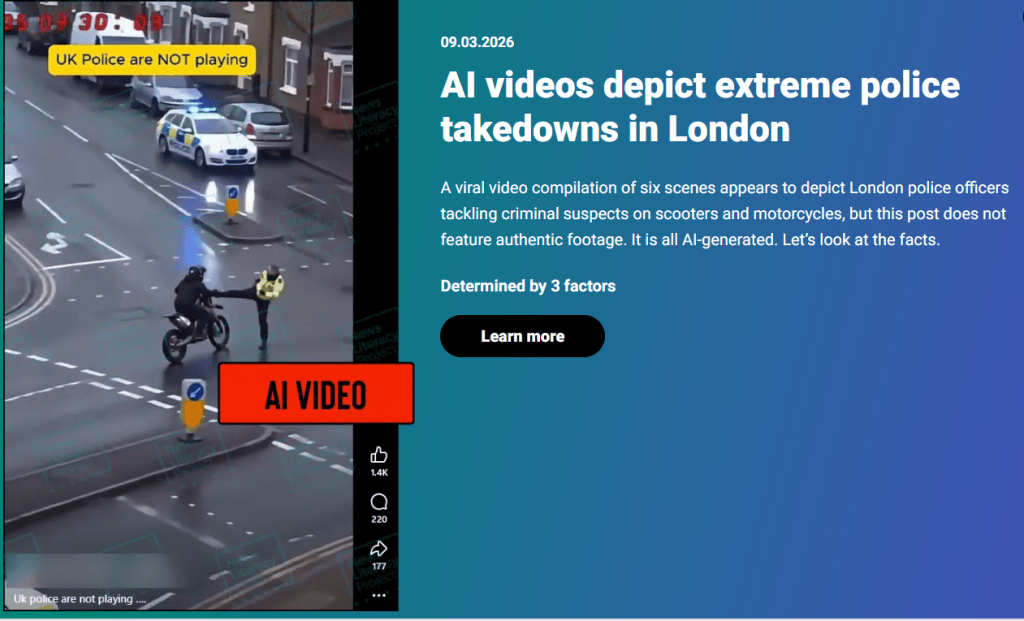
This is a very popular video circulating on the internet. The video contains United Kingdom police officers taking down thieves with some very impressive takedowns.
Now, with this in mind, we can see the video and think it’s so cool and it must be real. WRONG! RumorGuard explains why. It gives us the “why” based on 5 credibility factors. RumorGuard explicitly states that a post that fails a single factor is generally just as false as a post that fails all five.
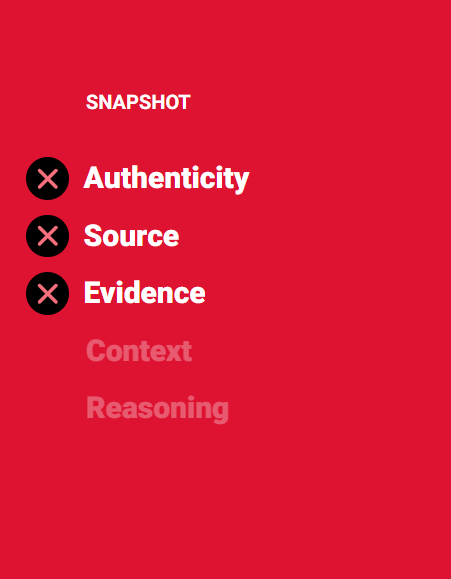
This website isn’t a very interactive puzzle/game tool for users to “try and depict whether this is fake news”. It is more of a tool designed to show users why these images, videos, or articles are fake and listing out the criteria. To use this tool, one would choose a rumor located near the bottom of the page. Users would then be able to read the credibility factors that show up once you click on the rumor. Each factor (Authenticity, Source, Evidence, Context, and Reasoning) will aid the user is developing questions about the misinformation being posted. Before the five factors, one would also be able to see a quick look and the main takeaway from the information being shared! The website also provides techniques, videos, info lessons, and how you can take action against misinformation.
After exploring the website, I have come to the conclusion that it is actually quite useful and very effective at giving guidance about misinformation. The website comes in handy, especially in today’s society, because the content featured on it would actually be something that someone would come across on social media. It makes it more realistic, and one would be able to see firsthand how misinformation spreads and how you could prove it to be false. If you are looking for more of a game setting, this website features multiple games or quizzes to test your knowledge on misinformation!
NEXT UP …
Harmony Square
Rather than just a website, Harmony Square is a free interactive game online to test one’s knowledge on political disinformation. Taking a quick look at the main page … very eye catching.
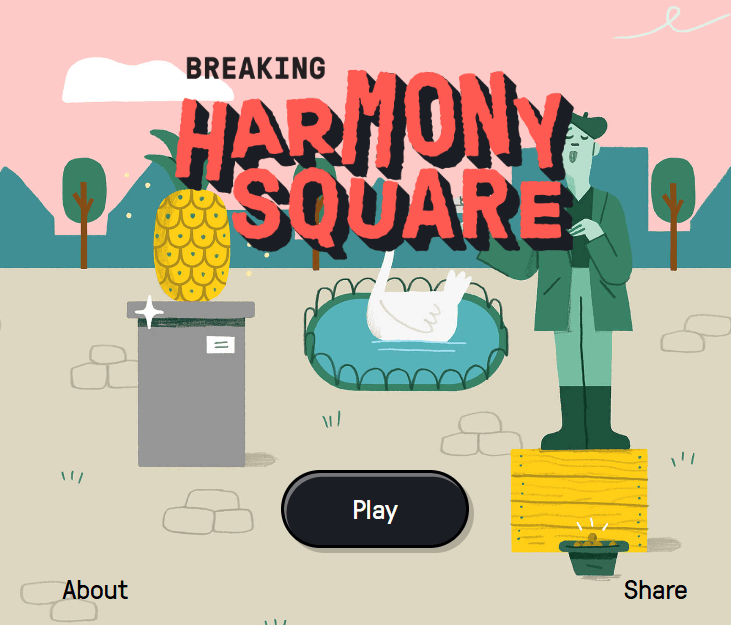
As the Chief Disinformation Officer or, “Carmen SanFrancisco” under my new identity, you ARE the chaos that ensues in Harmony Square. There are four chapters to go through, and with each chapter, you spread disinformation. Think of it like the Butterfly Effect. Every choice you make comes with a consequence.
Starting in Chapter One, you are a huge rage baiter. With rage baiting, you are relying on people to act out based off of their emotions to a certain topic. So, with spreading disinformation that you ultimately choose, you invoke a response to generate engagement, clicks, and ultimately, revenue depending on the goal you’ve created for yourself.
With Chapter Two, you are the bearer, no pun intended, of bad news. You reach out to society to spread disinformation relating to a campaign. This is relatable to society with past presidential elections with voice automated robo calls.
Chapter Three – spreading fear. Just like chapter one, you are using emotions as a way to provoke chaos in the square. By posting about the guard potentially coming to the square, you cause fear. These emotions, like fear, anger, and anxiety can make individuals more susceptible to accepting emotionally charged narratives, even if they lack factual basis.
Chapter Four ends with you provoking more people by posting disinformation, ruining someone else’s career, and ultimately the town. With each chapter, you gain popularity. In this chapter, you want to cause the most chaos, so the popularity increases with bots and fake followers and the sharing of your content. Pretty crazy that I had received over 50,000 followers by spreading disinformation.
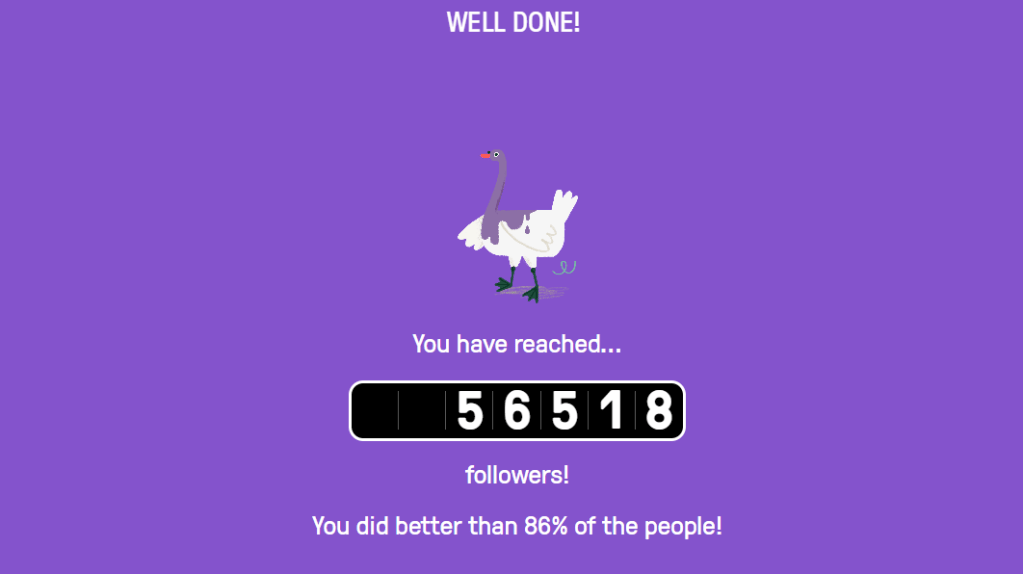
I would rate Harmony Square an eight out of ten.
The game itself was very entertaining and captures your attention with the gameplay. It was an interactive game where you make all of the decisions. Instead of reading what the different kinds of techniques are to try and prove something as mis/disinformation, you get to USE those techniques in the game to ensue chaos from the other side. Research had also suggested that those who have played the game online have become more confident in spotting manipulated content or mis/disinformation. I would say that’s a win!
One weakness I did spot was it was all based on politics. I would say one way to improve this would be to include stories/articles that also relate more to society i.e., science, health, school, or any other subject that we would see today. I would say that Harmony Square is an effective tool to teach about disinformation for those who learn by doing rather than reading about it.
Overall
I think in today’s society, attention is caught by how cool a website looks or how interactive something is. Educational tools such as Harmony Square and RumorGuard have a certain aesthetic appeal to them that they can catch attention. Interactive tools like these along with others can make learning more fun and engaging, so it’s easier to remember! However, I will say that games and interactive tools will not stop the problem relating to mis/disinformation spreading. Combined with media literacy training, I believe that fake news would decline; however, very slowly. Change won’t happen in a day!

