blog post #4
This week, we were tasked to research two platforms’ current attempts to curb misinformation. I initially thought that there’s no way that they actually take precautions to curb misinformation, and then I remembered Facebook and TikTok. I remembered seeing a pop-up on Facebook that blurred out a post, telling users to basically take caution when viewing that specific post because it might hold false information. That got me thinking; what other platforms have the same method? The further you read, the more you will see the steps the different platforms take to steer people in the right direction
When it comes to Facebook, most of us know it’s owned by Meta Platforms with its CEO, Mark Zuckerberg. Launched in 2004, Facebook became a worldwide phenomenon. What started as a way for college students to communicate with one another, soon became a worldwide platform for those to connect globally. When it comes to sharing information, especially around the world with 3.6 BILLION users, there is room for misinformation to spread. That’s why some platforms have precautions set in place just in case someone decides to share something fake. In Meta’s Policy Details, it labels its guidelines based off of content they either remove or have warning labels for.

GUIDELINES
Misinformation Removed:
I. Physical Harm or Violence
II. Harmful Health Misinformation
III. Voter or Census Interference
Each one of the following guidelines are a good policy to have. Now, let’s get into each of them a little bit more.
I. Physical Harm or Violence – Facebook removes any claims that are deemed false or unverifiable if they could potentially lead to violence. In areas that are more combative or currently in unrest, Facebook works with organizations to render information unreliable or false. This includes false videos of violence or even military activity.
II. Harmful Health Misinformation – Working with health organizations, Facebook also removes any information that would potentially cause
harm to an individual’s health. In the past, Facebook had removed COVID-19 vaccine misinformation because it could either encourage people to get/not to get the vaccine or to spread the disease. Any harmful “techniques” to cure an illness would also be removed.
III. Voter or Census Interference – This is a big one that happens so often, especially during a presidential election when people’s emotions are high. To help prevent from the inability to vote or participate in an election, Facebook removes any information that could potentially interfere with that. This information could be false dates/times, ones’ eligibility, ballot locations, etc.

INFORMATIVE LABEL
For the manipulated media, Facebook will have the warning label attached to media or remove the media in its entirety. The digitally altered media would be removed if its intent is to mislead individuals about public issues. Digitally altered media could be videos, images, or even audio. A great example of digitally altered audio, as I have mentioned in a previous story, was the robocall impersonating Joe Biden. There isn’t a lot of policy regarding the informative label.
Recently, in early January of 2025, Meta had announced that they will no longer be working with third parties to fact-check information being shared. What?! When I would see the pop-ups on Facebook, I was actually relieved that it would tell me that. Now, Facebook has moved towards what’s called Community Notes (see below).
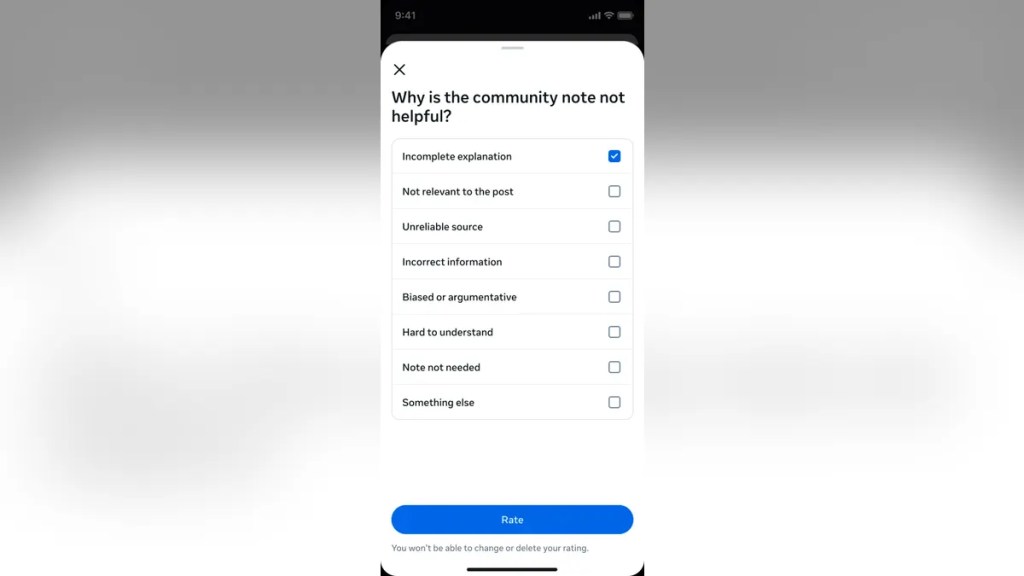
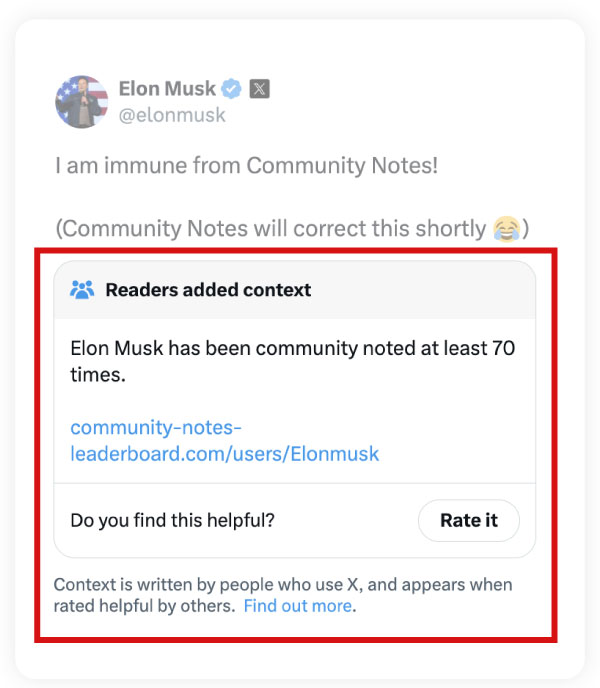
The spirit and intent of Community Notes lies in … you guessed it, the community. Instead of letting the third parties and Facebook decide, they are allowing the community to give additional context as to what the post means. Is this actually reliable? The contributors can write the different notes under a post, and viewers are allowed to rate them on how accurate the information is. The only way I see that it could be helpful, is if it leaves out important information. Therefore, a contributor may leave additional context. It’s sort of a complicated process when you read about it. In order to submit a note, the system behind Facebook looks for a consensus between contributors who have recently disagreed on posts before. It’s intended to steer away from biasness. What I find very concerning is the contributors are the ones who decide what notes are shared, written, and rated – not Meta.
In my opinion and from my personal experience, I believe one of the bigger problems is that no matter how much context you give or how much information is taken away, misinformation is still being shared, very quickly actually. A warning label like above can help, but then you still have to rely on people paying attention to it. If someone saw something that they already trust in, they might ignore the warning signs. There’s no winning here.
TIKTOK
Tik Tok is a relatively newer platform where users can make videos of themselves or others. Across my feed is a ton of funny videos, Doberman videos, a true crime videos because I’m in love with true crime. I’m not too familiar with Tik Tok policies; however, I have seen pop-ups on videos where you can see the origin of the video if the video being viewed is not original.
Tik Tok is all videos, so it can be more challenging to figure out whether something is fake. In this case, misinformation can be spread through a video, an audio, comments, or even manipulated media. Tik Tok doesn’t really break it down as well as Facebook, but they do lay out their misinformation policies on their website under policies and engagement.
Tik Tok’s policies prohibit any type of media that incites violence, can harm health, or spread misinformation during elections just like Facebook does. This will come as a banner on your phone (pictured below) when sharing something that has not been verified.
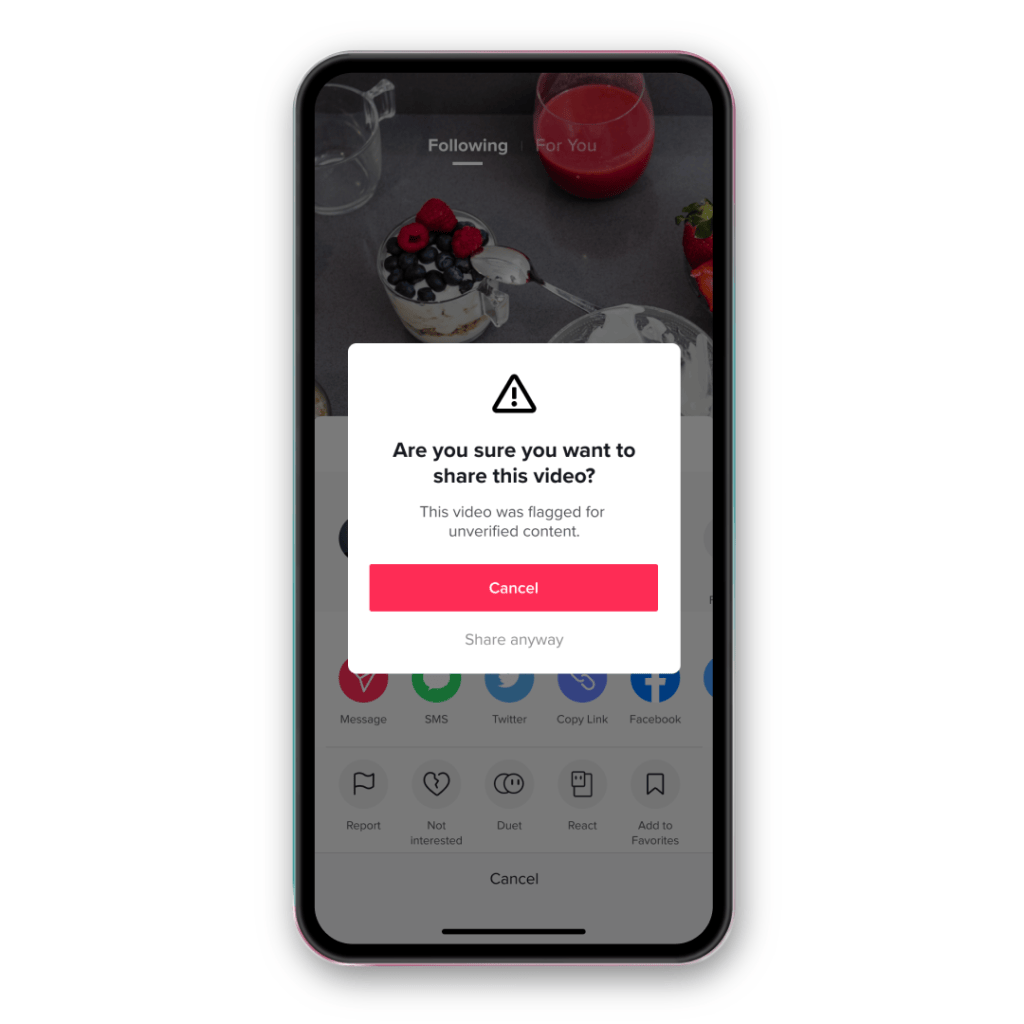
Now, Tik Tok also has automated factcheckers as well as human moderators to moderate the information being shared. Getting into the fact-checking business, Tik Tok has a pretty impressive fact-checking system. Essentially, the moderators and the system will review information that could potentially be misinformation. Then, they utilize a claim and basically run it through a claim database that has already been marked verified or turn it over to independent administrators. What is impressive to me is that Tik Tok works with over 20 International Fact-Checking Network (IFCN) organizations to combat misinformation. Harmful misinformation is frequently removed, or if not, Tik Tok will try everything to have the reach limited (especially on the For You page). With this, the factcheckers and moderators look for emerging trends to try and stop it as well.
Footnotes on Tik Tok were introduced last year in July. It can be compared to Facebook’s Community Notes. Viewers and users are able to provide additional context to a video to support a claim or to input information to make it more credible per say. The users are also able to input whether or not the information provided was helpful or not. Since everyone has the freedom of speech, the videos aren’t necessarily removed, so contributors are able to fill in viewers on what the video actually means if they don’t understand.
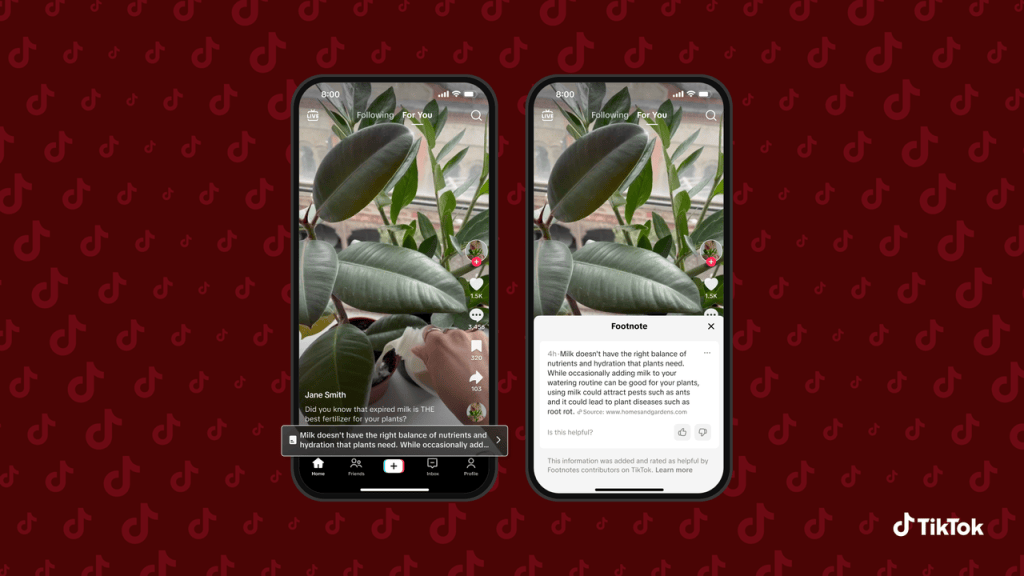
For me, I do appreciate some good context when it comes to videos because sometimes a video doesn’t do all the justice. It makes the most sense to have footnotes in a platform like this. I’ve seen old photos on Facebook that have been reposted as if it were yesterday; it’s the same with Tik Tok videos. The only real thing that cannot have footnotes would be the live streams, but that’s sort of self-explanatory.
With that in mind, I do think Tik Tok, however, is faced with a difficult challenge at combating something like this. Tik Tok is everywhere. Tik Tok reels are even on Facebook. You can’t really escape them. A Tik Tok that’s posted could’ve already been seen by millions of people before it’s ever reached by a factchecker or administrator.
So, what do I think?
Well, for one, I feel as if both platforms have good policies in place and they mean well. Even if someone has policies put into place, it doesn’t necessarily solve the problem. I will give them the benefit of the doubt when it comes to no just deleting a post because they think it’s false. They give others the opportunity to watch out for warning labels, add feedback in community notes or footnotes, and think critically about what they are seeing. However, with the soaring social media output, media spreads way quicker than you think, so it would be difficult to catch misinformation straight away. You also run into a problem with individuals disagreeing on what could be false. If someone believes something is real and another does not, how could you approach that? Media literacy, in this case, would be important to combat misinformation.

Now, I’m the owner. This is what I would change …
# 1 – Instead of telling people that a certain post or video could potentially house misinformation, I would explain why. We all grew up wondering the whys of the world, it shouldn’t stop now. Along the same lines, maybe both platforms could provide links to sources that have verified information. If available, we could keep the same footnotes/community notes concept but have the moderators provide the links.
# 2 – Just like when you’re scrolling for too long and the little add pops up with, “Maybe you should take a break” (as seen on Tik Tok), that can be used as a possible opportunity to include reminders to verify what you see.
# 3 – When something is deemed false, I would want it to be quickly reviewed, especially when reported as such.
It seems as if the job is left to us. Overall, both platforms have good policies put into place to help stop the spread of misinformation. However, the job to combat that is essentially up to us. We, the users, have to stay vigilant and be a part of the solution. Going through media literacy training and sharing that information with everyone could help limit the spread. Do your research. Stop the spread.

